Key Highlights
- A simple living style starts at home with easy habits you can do every day.
- Urban homesteading is possible in a small space, even if you do not have your own piece of land.
- Growing greens, herbs, or a few vegetables is a great way to feel more sure about your food.
- Making your own bread or cooking simple meals helps cut costs and teaches useful skills.
- Food storage, like freezing or using a water bath canner, helps you waste less.
- Doing small repairs, making compost, and having a budget make life steadier and help you feel more independent.
Introduction
You do not need a big house, lots of land, or extra time to be self-sufficient. You can start with simple living and be open to learn new things. You do not have to live in the country because urban homesteading works in an apartment, a suburb, or anywhere you feel at home. A great way to begin is to pick one useful habit and practice it until you get good at it. If you keep doing it this way, you will feel more sure about yourself, feel safer about food, and build a homesteading spirit. You will not need to rely on stores as much, and you will feel proud of what you can do on your own.
12 Essential Tips on How to Be Self-Sufficient Today
You do not have to live in a rural paradise to practice urban homesteading. What matters most is having an urban homesteading mindset, not where you live. If you grow your own food, store any extra, cook at home, and repair things you already have, you will see more progress than if you wait for big plans to start. These small steps can help you live more on your own.
This is important because being able to do things for yourself happens one step at a time. Even things like basic butchering of livestock feel big, but you still start with a simple idea. Learn just one useful thing. Practice it. Then, build on that as you go. These 12 tips give you real ways to get started right now.
1. Start Growing Your Own Vegetables and Herbs
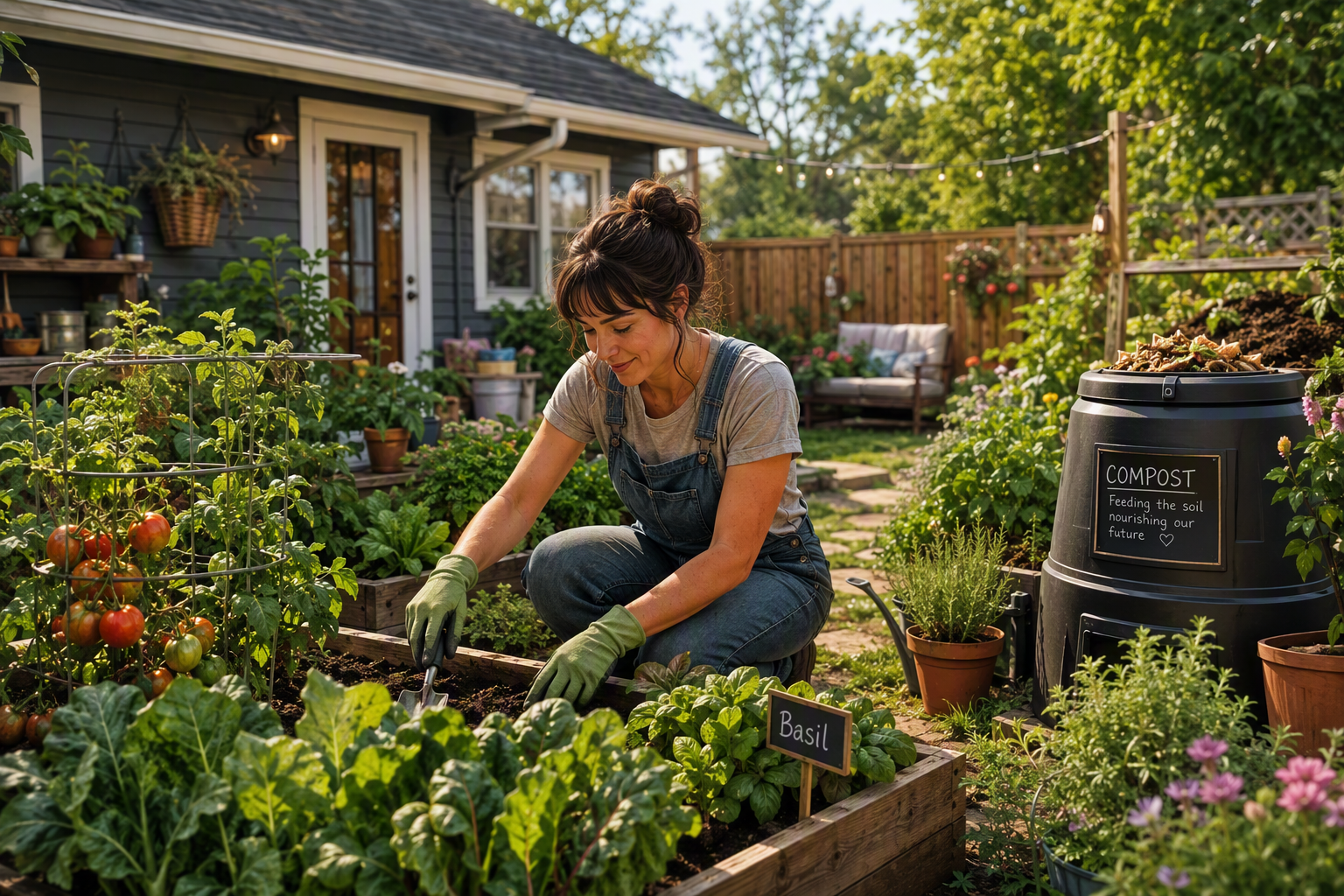
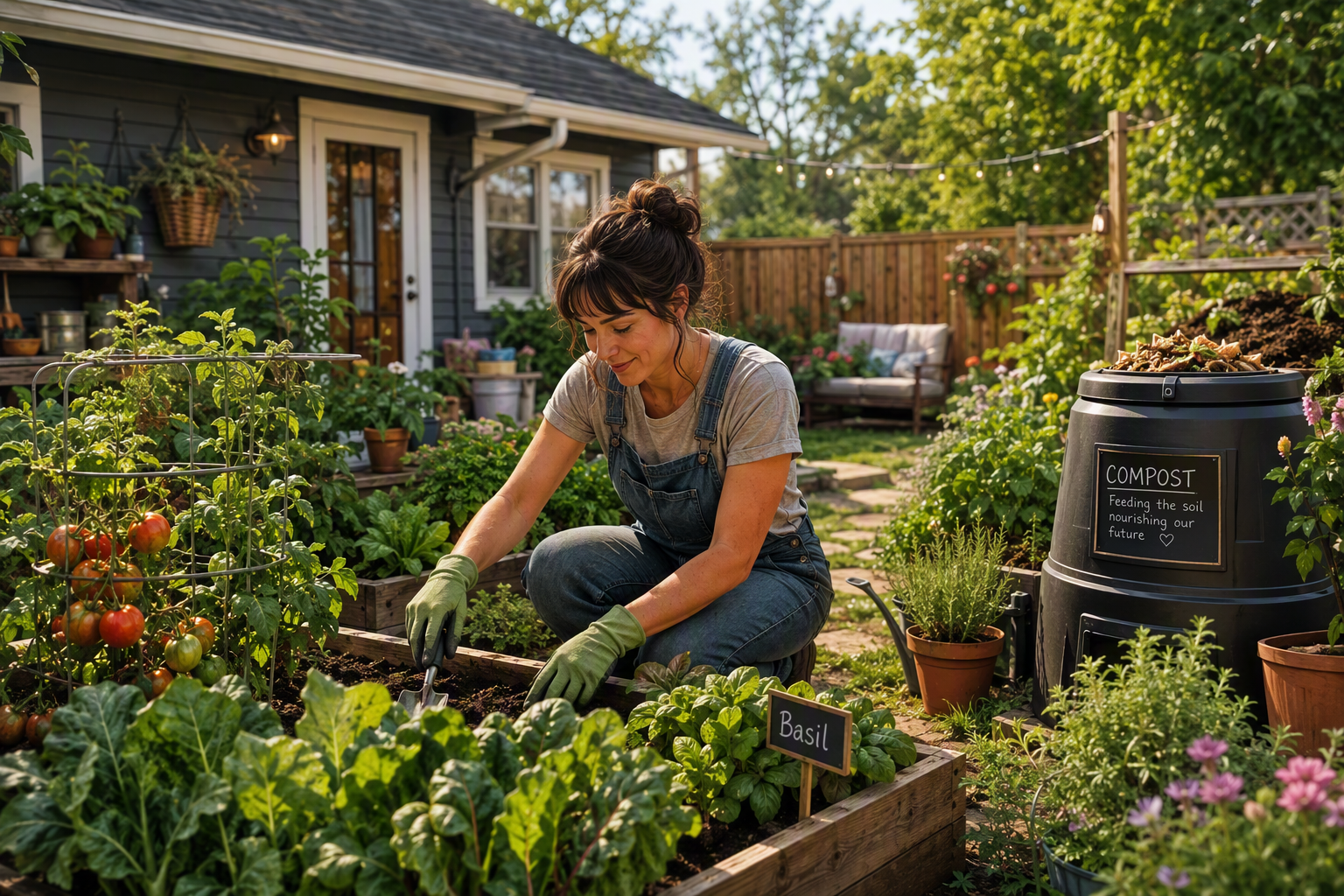
You do not need a big piece of land to grow your own food. A windowsill, a patio, or a small backyard can give you more than you might think. Start with simple plants that grow fast. Herbs, lettuce, and microgreens are good for beginners. They make meals feel fresher and more useful.
If you have more space to use, plant some tomatoes, peppers, or green beans in pots or a garden bed. It is often best to start small instead of planting everything at the same time. You can keep getting food from the farmers market as you learn. Later, you can use more of your own food as you start to grow more.
- Grow basil, parsley, or mint inside. Place them near a spot with good light.
- You can use trays for lettuce or microgreens. They grow quick and you can pick them soon.
- Try using containers if you want to grow tomatoes, peppers, or green beans.
- Regrow green onions or celery in water next to where you make your own bread.
2. Preserve and Store Food at Home
Food security gets better when you know how to keep extra food from going bad. You can start with easy steps like freezing, drying, and putting labels on your food. If you see that fruit or vegetables are almost bad, put them in the freezer. You can use them later in smoothies, soups, or baking. You also can dry herbs or make fruit leathers for easy snacks.
Water bath canning is a good skill to start with. You will need a water bath canner, some jars, rings, and lids. These are all you need for your first projects. A mason jar works well for making jams or pickles. Make sure you know the difference between high acid foods and low acid foods before you choose your way to can your food.
Method | Best Use |
|---|---|
Water bath canning | High acid foods like jam, pickles, and some fruits |
Pressure canner | Low acid foods that need higher heat for safe storage |
Food saver | Dry goods and freezer items that need longer freshness |
Dehydrating | Herbs, fruit leathers, and produce for compact storage |
If you want to do more later, a pressure canner or even quart pressure canners can help you with more jobs in your pantry.
3. Cook More Meals from Scratch
Cooking from scratch is a simple way to practice being self-sufficient every day. You can use things you have at home and not depend on food that comes in packages. You do not have to learn at a restaurant or from someone like Thomas Keller. You only need a few easy meals you can make again and again.
Start with affordable basics like whole chickens, dried beans, soup, bread, and oatmeal. These foods go a long way. If you learn about recipe ratios, cooking becomes easy. You do not have to follow detailed directions every time you cook. This helps you save time. It is also less stress in the kitchen.
- You can bake with your own flour or use pantry staples that you get in bulk.
- Roast whole chickens and then use what is left to make broth or soup.
- Cook dried beans instead of using canned beans to get a nutritious food for less money.
- Try to plan meals where large portions of meet are used across different dishes.
4. Practice Rainwater Harvesting
Having a limited budget or living in a small house does not stop you from building useful systems. A great idea is rainwater harvesting. If your area lets you do this, you can use a rain barrel. It will catch water for your plants and not make your water bill go up. This is a simple first step that has a good result.
You do not have to make your home run with solar panels or become off-grid right away. Most people will not do this tomorrow, and that is okay. Self-sufficiency does not mean you need to do things like your own heart surgery or be fully independent in a month. It means you take care of your basic needs a bit better than before.
- Set up a rain barrel. You can use it to water containers or a garden bed.
- Take the water you collected for your outdoor plants. This way, you do not have to use treated tap water.
- It is good to match your outdoor habits with simple tools. Use an outdoor propane cooker when you need it.
5. Learn Basic DIY and Repair Skills
One thing you can do at home is to fix things rather than get new ones. This old habit helps save money. It also helps you feel better about your own skills. You do not need a lot of room or a lot of tools to start. In a small space, you can learn easy repairs that help things in your day work well.
Start with small projects. Try sewing a loose button on a shirt. You can also tighten cabinet hardware, fix a tear in something, or use glue to repair a chair leg. Every new skill you learn makes you feel less dependent on others for help. Over time, these small wins feel just as valuable as learning navigation skills or even cutting your own hair.
- Keep a basic toolkit that has a hammer, a screwdriver, and a wrench.
- Learn simple sewing. It will help you fix rips, hems, or missing buttons.
- Watch how-to tutorials before you toss out something that is broken.
- Try to practice one repair each month. This will help you build skill over time.
6. Reduce Waste and Start Composting
Reducing waste can be easy. You can freeze the food before it goes bad. You can also save scraps to make broth. Try to use items you can use many times instead of ones you throw away. These small steps do matter. They help you see how much good you already have in your kitchen.
Composting is easy and can help a lot. Food scraps, weeds, dead leaves, and yard waste can turn into rich soil instead of just being trash. People who live in apartments can use a small compost bin on the counter or get a setup that fits their space. If you keep things like rice or beans in a mason jar, reuse other containers, and plan before you throw things out, you will see that your waste goes down fast.
- You can start to make compost with fruit peels, coffee grounds, and yard waste.
- Save your food scraps in the freezer and use them for broth before you add them to the compost.
- Use old cloth for cleaning, so you don't have to buy more disposable items.
You do not need to get a better book. You do not need advice from Sarah Nussbaum. You do not need a quarter cow, either. You can start with the things you throw away today.
7. Adopt Simple Energy-Saving Habits
Being self-sufficient means you do not need as many things from other people because you use less to begin with. That is why it helps to save energy. With simple habits, you spend less money, make what you have go further, and help your home work better. You do not need big changes either. In urban homesteading, even small steps like this make a big difference.
Some people may want to get solar panels, smart plugs, or timers later, but you do not have to begin with these. You can start by air-drying clothes, using your tools carefully, and planning your home tasks. These things can make a satisfying impact right now. Simple steps are often easier to keep doing than costly changes.
- Air-dry your laundry. This helps you save energy and your clothes last longer.
- Use reminders and timers. This way, you will not leave lights or devices on by mistake.
- Do your home tasks together in batches. This helps you use tools or machines less often.
8. Make Your Own Cleaning Products
Making your own cleaning products can save you money every day. You do not need to buy things at the store as often. It helps you always have what you need at home. You just need some simple things like vinegar, water, and maybe a few drops of your favorite essential oil. This mix will work for many cleaning jobs around the house.
This way works well because the process is simple. When you know the right recipe ratios, you can mix what you need without a lot of work. The same happens when you bake with your own flour or try to make other things at home. You do not need a homemade root beer kit or a homebrew kit to begin making things by yourself.
- Mix a simple all-purpose cleaner by using vinegar and water.
- Refill reusable containers instead of buying new bottles all the time.
- Make bigger batches when you already have the ingredients out.
9. Embrace Minimalist Living
Minimalist living helps you be more self-sufficient. It shows that when you need less, life gets easier. If you buy fewer things, you do not have to keep up with as much, and there will be less to store. You also spend less money and lose less time. This change can touch your whole life in good and useful ways.
This does not mean you have to live with nothing. You can pick what is useful and let go of things that add clutter. A capsule wardrobe, secondhand shopping, and using what you already own can give you a satisfying impact. You may see that what used to feel like a big deal now becomes much simpler.
- Make a list of what you need before you buy anything new.
- Pick reusable cloths, jars, and containers instead of things you throw away.
- Try to buy secondhand items when you can and find new uses for things you already have.
10. Develop Budgeting and Money Management Skills
If you live in a city, it can be good to have a budget. A budget helps you look at where you spend your money. It lets you make better choices and work toward being more self-sufficient. When you spend with a plan, you can pay for the things you really need. These things can be pantry staples, tools, seeds, or the supplies that help you reach your goals over the year.
Think of this like money homesteading. You take care of your money instead of letting it slip away. You do not need lots of books to get started. A simple budget on paper and checking it often can help you see what has to change. Some people like to use total money makeover strategies. These can give you a plan to help get out of debt.
- Track what you spend for a month. Look for things where you waste money.
- Put money to the side for buying food in bulk, repairs, or other things you need.
- Try to eat at home more often. This can help you have more cash for other things.
No matter if you read Michael Ruhlman or do not, the key skill you need is to be consistent.
11. Grow Indoor Plants for Food and Air Quality
If you live in a city or have a small apartment, indoor plants can be a great way to practice self-sufficiency. This fits well with an urban homesteading mindset. A familiar spot like a kitchen ledge can quickly become a place where you grow herbs, greens, or even use scraps to grow new plants. This makes it easy for people in city homes to get started with urban homesteading.
Start with herbs and greens that are simple to look after. You can grow basil, mint, parsley, lettuce, and microgreens inside. All you need is enough light and to water them often. With this, you get some nutritious food for your meals and feel more linked to what you eat. How you feel connected to your food is more important than how much space you have.
- You can grow herbs in jars or other containers near a sunny window.
- Try using trays to grow microgreens or lettuce. These are ready to harvest fast.
- Put green onions or celery in water to help them grow back. This way, you can use them again.
12. Connect with Local Community Resources
Self-sufficiency doesn't mean you have to do everything by yourself. It means you learn how to take care of more things, but you still stay close to other people. Your local community has a lot of resources that can help you. You may spend less money, pick things up faster, and have a stronger daily routine when you use what your community offers.
Look in your area for people who can help you. A farmers market gives you local food when you do not have enough. You can also try plant swaps and secondhand shops. Some neighbors have skills you may need. When it comes to urban homesteading, community will often help close the gap between what you know now and what you hope to learn soon.
- Swap seeds, plants, food, or things you know how to do with your friends.
- Buy from people near you who grow or make things when you can.
- Pick up skills from others, like gardening, sewing, or cutting your family’s hair.
Conclusion
To sum up, choosing to be self-sufficient is more than just a new idea. It is a lifestyle change that lets you be in charge of your own needs and rely less on others. When you use the twelve simple tips from this blog, like growing food at home or living with less, you help the world and feel better in your daily life. Each step you take will matter, and over time, these small changes will help you feel more free and happy. If you feel ready to try living this way, start today and see how your life can change for the better!
Frequently Asked Questions
What are the easiest steps to start becoming more self-sufficient at home?
Here is a short list of things you can do right away: cook your meals from scratch, grow some herbs, fix simple things, and try to use less so you have less waste. You do not need a big piece of land for this. A small space is fine. These habits still matter. Remember, it is not a big deal to start small. It works like navigation skills—when you practice, you feel more sure about what you are doing.
How can I practice self-sufficiency if I live in a city or small apartment?
Try to use an urban homesteading mindset and think about what you can do in your small space. Grow some indoor plants. Try to cook many meals from scratch. Learn some simple recipe ratios, and keep your food in a way that makes it last longer. If you feel ready for more, get a tool such as a grain mill for baking your own bread at home. Even small actions in urban homesteading can help you and can turn into bigger good habits.
What are the main benefits of becoming more self-sufficient today?
The big benefits are less waste, better food security, and stronger skills you can use. You may feel more sure about your whole life. Many modern homesteaders feel a satisfying impact when they do things for themselves. Some bake their own bread or cook large portions of meet. Others feel good when they do not depend on outside systems so much.