Ultimate Guide to Apple Tree Guild Design
Key Highlights
- Fruit tree guilds are a permaculture technique that creates a thriving ecosystem around a fruit tree, providing numerous benefits for the environment and the gardener.
- The key components of an apple tree guild include companion plants, nitrogen fixers, and pollinator attractors.
- By incorporating a fruit tree guild, you can maximize space, attract beneficial insects, suppress weeds, retain moisture, and improve soil health.
- Step-by-step to designing your apple tree guild includes preparing the site, selecting companion plants, and incorporating nitrogen fixers and pollinator attractors.
- FAQs: Which apple varieties work best in a guild setting?
- Conclusion: Creating an apple tree guild is a fantastic way to promote biodiversity, enhance the health of your fruit trees, and create a sustainable garden ecosystem.
Introduction
Fruit tree guilds are a permaculture technique that aims to recreate the natural ecosystem found in forests. By mimicking this natural system, gardeners can create a self-sustaining and productive environment for their fruit trees. A fruit tree guild consists of a community of plants that work together to support each other and the fruit tree. These plants provide a range of benefits, including nutrient cycling, pest suppression, moisture retention, and attracting beneficial insects. Implementing a fruit tree guild in your garden can maximize your growing space, promote biodiversity, and reduce your workload by creating a self-sustaining ecosystem.
Understanding Apple Tree Guilds
An apple tree guild is a specific type of fruit tree guild that focuses on creating a supportive ecosystem around an apple tree. In permaculture, a guild refers to a community of plants that have symbiotic relationships with each other. These plants work together to provide various benefits, such as nutrient cycling, pest control, and soil improvement. In an apple tree guild, companion plants, nitrogen fixers, and pollinator attractors are strategically planted around the apple tree to create a balanced and productive system.
The Concept of a Guild in Permaculture
In permaculture, a guild is a group of plants that have a symbiotic relationship with each other. This means that they mutually benefit from being grown together. Each plant in the guild has a specific role to play, such as providing nutrients, attracting beneficial insects, or suppressing pests. By creating a guild around a fruit tree, gardeners can harness the power of these symbiotic relationships to create a healthy and productive ecosystem. By using permaculture principles, fruit tree guilds can be designed to mimic the natural systems found in forests, where diverse plants work together to create a balanced and self-sustaining environment.
Benefits of Implementing a Guild System
Implementing a guild system, such as an apple tree guild, in your garden has numerous benefits. Here are some key advantages of creating a fruit tree guild:
- Biodiversity: By incorporating a variety of plants in your guild, you promote biodiversity in your garden, which is essential for a healthy and resilient ecosystem.
- Pest Suppression: Certain plants in the guild can help suppress pests, reducing the need for chemical pesticides.
- Moisture Retention: The combination of plants in the guild can help retain moisture in the soil, reducing the need for frequent watering.
- Beneficial Insects: The companion plants in the guild attract beneficial insects, such as pollinators and predators of garden pests, creating a balanced and natural pest control system.
By implementing a guild system, you not only create a more sustainable and productive garden, but you also contribute to the overall health of the ecosystem.
Key Components of an Apple Tree Guild
The key components of an apple tree guild include companion plants, nitrogen fixers, and pollinator attractors. Companion plants are selected to provide specific benefits to the apple tree, such as attracting beneficial insects or deterring pests. Nitrogen fixers, like legumes, add nitrogen to the soil, providing a natural source of fertilizer for the apple tree. Pollinator attractors, such as flowers or herbs, attract bees and other pollinators, ensuring successful fruit production. By including these components in an apple tree guild, you create a balanced and supportive ecosystem for your apple tree.
Selecting Companion Plants for Apple Trees
When selecting companion plants for apple trees, it is important to consider the specific needs of the apple tree and the desired benefits you want to achieve. Companion plants can serve various purposes, such as attracting beneficial insects, deterring pests, providing shade, or suppressing weeds. Some popular companion plants for apple trees include herbs like yarrow, thyme, and mint, which attract beneficial insects and provide additional culinary uses. Flowers like nasturtiums and marigolds can deter pests and add color to the garden. By carefully selecting companion plants that work well with apple trees, you can enhance the health and productivity of your fruit tree guild while promoting biodiversity in your garden.
Incorporating Nitrogen Fixers and Pollinator Attractors
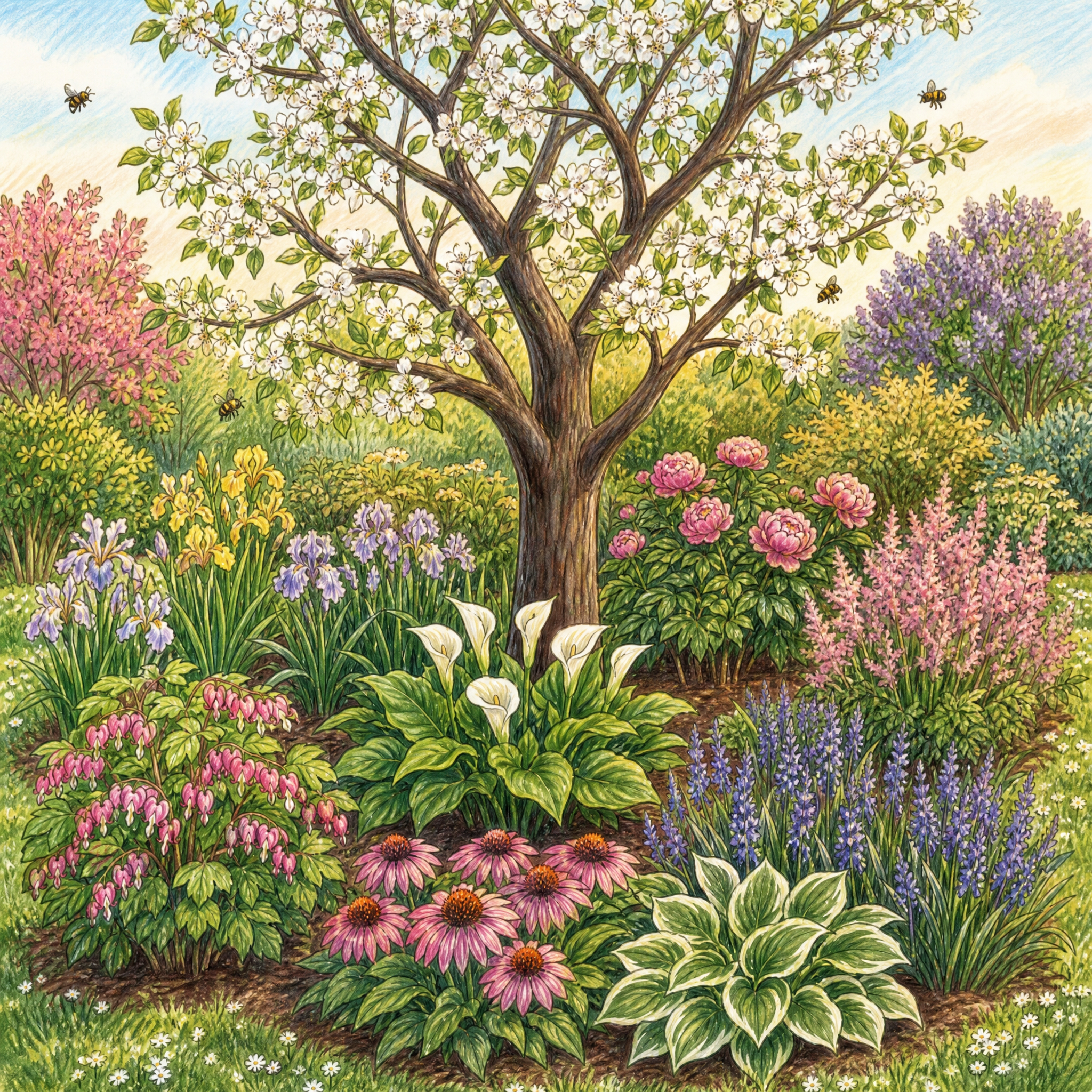
Incorporating nitrogen fixers and pollinator attractors in an apple tree guild is essential for creating a thriving ecosystem. Here are some key points to consider:
- Nitrogen-Fixing Plants: Planting nitrogen-fixing plants, such as legumes like clover or beans, adds nitrogen to the soil, which is essential for the growth of the apple tree.
- Pollinator Attractors: Including flowers like borage or lavender in the guild attracts bees and other pollinators, ensuring successful fruit set and production.
- Legumes: Legumes, like clover or peas, are excellent nitrogen fixers and can improve the fertility of the soil.
- Clover: Clover is a versatile plant that not only fixes nitrogen but also acts as a ground cover, suppressing weeds and adding organic matter to the soil.
By incorporating these plants in an apple tree guild, you create a balanced and self-sustaining ecosystem that supports the health and productivity of your apple tree.
Step-by-Step Guide to Designing Your Apple Tree Guild
Designing an apple tree guild involves careful planning and consideration of the specific needs of the apple tree and the desired benefits you want to achieve. Here is a step-by-step guide to designing your apple tree guild:
- Step 1: Preparing the Site: Clear the area around the apple tree and prepare the soil by removing weeds and adding compost or organic matter.
- Step 2: Planting and Arrangement: Plant the companion plants, nitrogen fixers, and pollinator attractors around the apple tree, considering their specific spacing and arrangement to create a balanced guild.
- Step 3: Maintenance: Regularly monitor and maintain the guild by pruning, fertilizing, and providing appropriate care to ensure the health and productivity of the apple tree and its companion plants.
By following this step-by-step guide, you can create a successful apple tree guild that promotes biodiversity, enhances the health of the apple tree, and creates a sustainable and productive garden ecosystem.
Preparing the Site for Your Guild
Preparing the site for your apple tree guild is an important step in creating a successful and productive ecosystem. Here are some key points to consider:
- Soil Preparation: Clear the area around the apple tree and ensure the soil is well-drained and fertile. Amend the soil if necessary by adding compost or organic matter to improve its nutrient content.
- Mulch: Apply a thick layer of mulch, such as wood chips or straw, around the apple tree to retain moisture, suppress weeds, and improve soil structure.
- Compost: Incorporate compost into the soil to provide additional nutrients for the apple tree and the companion plants.
- Permaculture Technique: Use permaculture techniques, such as sheet mulching or lasagna gardening, to build healthy soil and create a sustainable ecosystem around the apple tree.
By properly preparing the site for your apple tree guild, you provide a solid foundation for the growth and success of the plants in the guild.
Planting and Arrangement Tips for a Balanced Guild
When planting and arranging the plants in your apple tree guild, it is important to consider their specific needs and the desired benefits you want to achieve. Here are some tips for a balanced guild:
- Planting: Carefully plant the companion plants, nitrogen fixers, and pollinator attractors around the apple tree, ensuring proper spacing and arrangement.
- Drip Line: Consider the drip line of the apple tree, which is where the outermost branches extend. Plant companion plants closer to the drip line to maximize their beneficial effects on the apple tree.
- Companion Plants: Select companion plants that have compatible growth habits and similar light and water requirements to create a harmonious guild.
- Guild: Aim for a diverse and balanced guild by including a variety of plants that serve different functions, such as attracting beneficial insects, improving soil health, or providing shade.
By following these planting and arrangement tips, you can create a balanced and productive apple tree guild that supports the health and productivity of your apple tree.
Conclusion
In summary, creating an Apple Tree Guild can significantly benefit the overall health and productivity of your apple trees. By incorporating companion plants, nitrogen fixers, and pollinator attractors, you can create a balanced ecosystem that supports the growth of your apple trees. Understanding the concept of guilds in permaculture and carefully selecting the right components are crucial steps in designing a successful Apple Tree Guild. With proper planning and implementation, you can enhance the resilience and sustainability of your apple orchard while promoting biodiversity and ecological harmony. Start designing your Apple Tree Guild today and reap the rewards of a thriving and interconnected garden ecosystem.
Frequently Asked Questions
Which apple varieties work best in a guild setting?
In a guild setting, it is important to select apple varieties that are well-suited to the growing environment and compatible with the companion plants in the guild. Dwarf fruit trees are often preferred for smaller gardens, as they take up less space. Some apple varieties that work well in a guild setting include 'Gravenstein', 'Liberty', 'Haralson', and 'Cox's Orange Pippin'.