Key Highlights
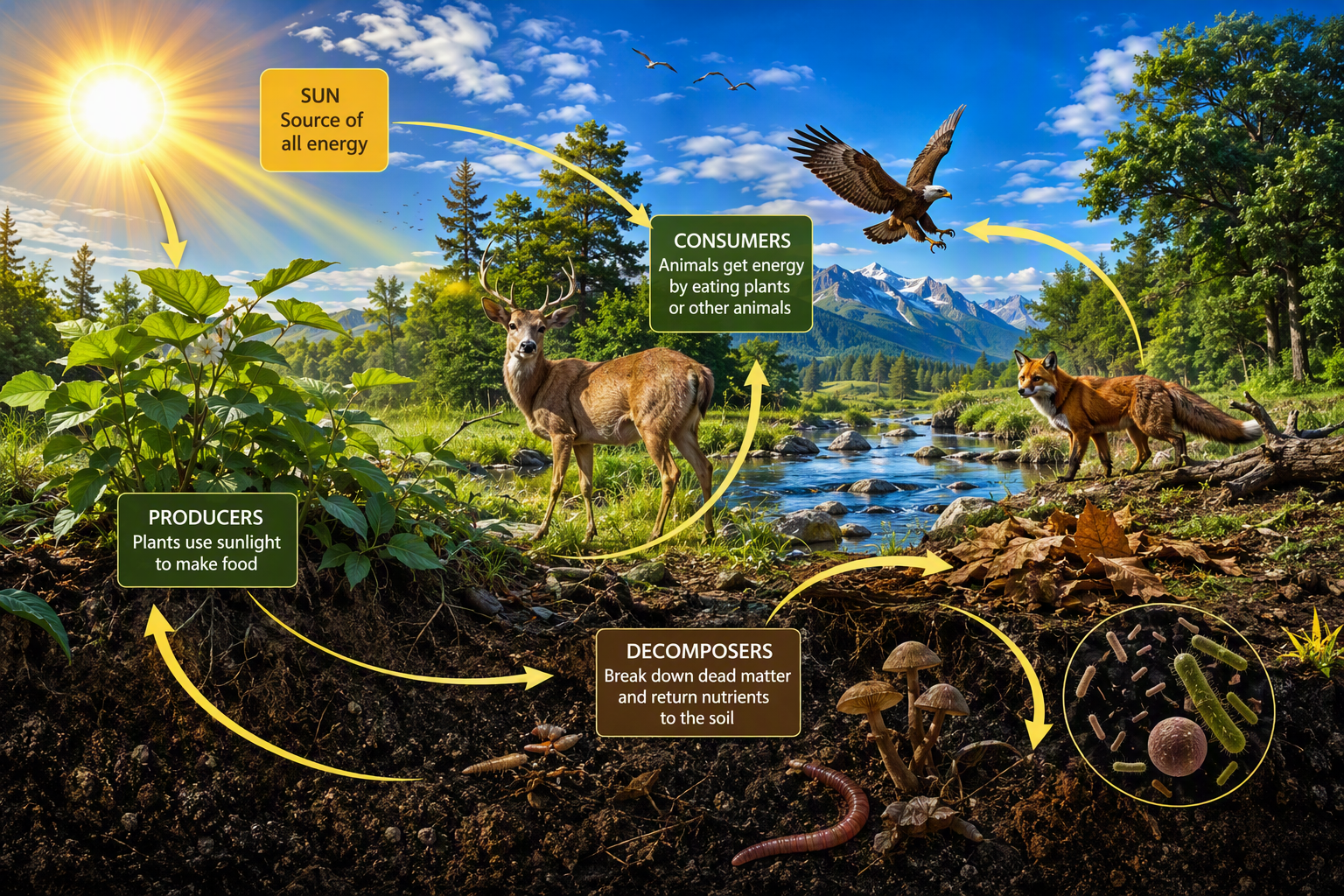
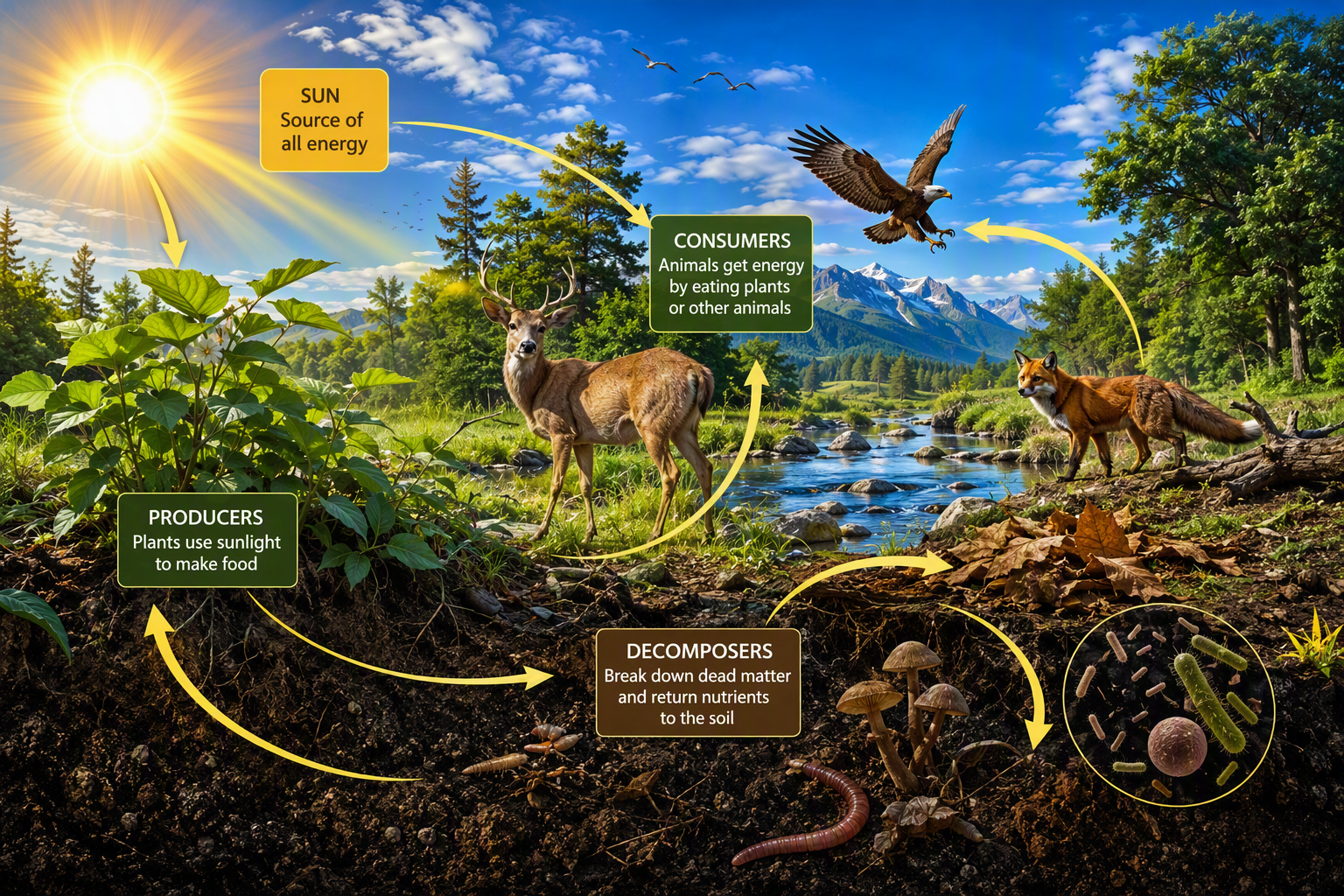
- Energy flow begins with an energy source. This is usually sunlight. Sunlight enters the ecosystem through primary productivity.
- Primary producers are at the first trophic level. They give support to the rest of the food web.
- Consumers help with the transfer of energy. As energy moves up the trophic levels, each level gets less energy than the one before.
- Decomposers break down dead things. They keep nutrients moving in the system.
- A food web shows the many links for eating in the ecosystem. An energy pyramid shows that less energy is left at each higher level.
- This pattern helps people know how the food web stays stable and balanced.
Introduction
Energy flow shows how living things get and use energy in an ecosystem. It starts when energy goes into the first trophic level. After that, the energy moves from one living thing to another through feeding. This is a one-way path from the first trophic level up. Energy does not go around in a cycle. At each step, some energy is used by the animals or plants. A lot of energy is also lost as heat. If you know this simple idea, you can see why living things are put into trophic levels. Each trophic level needs the energy from the level below it.
Understanding Energy Flow in Ecosystems
In ecosystems, energy transfers start when producers take in energy from outside. They keep this energy as chemical energy. This energy then moves in a food chain. It happens when animals eat plants or other animals.
The movement of energy is not ever fully efficient. The laws of thermodynamics show why this happens. At each trophic level, living things use some energy to live. A lot of this energy leaves as heat. This is why less energy is there as you go up each level. It is also why there are not many long food chains.
The Importance of Studying Energy Flow
Looking at the flow of energy can help you see how an ecosystem works as a whole. You can see where it comes in, how different living things use it, and why some groups of animals or plants help others survive. If you do not look at the transfer of energy, the food relationships may look random. But they are not.
Energy loss is a key part of how nature works. When an organism eats, it will use some of what it gets for breathing, growing, moving, and taking care of itself. Because of this, every step up in the food chain has less energy left than the one that came before it.
The law of thermodynamics helps us see why this happens. When energy is changed, some is always lost as heat. So, no ecosystem can send all its energy up to the next level. This changes how stable things are, as the number of organisms and their size depend on how much energy is left at each level.
Key Concepts and Definitions Related to Energy Flow
Before you follow how energy moves, there are a few things to know. A trophic level is the spot of an animal or plant in the food chain. Each level depends on the amount of energy that comes from the one under it.
The process often starts with primary producers. Then, it goes to the consumers. At the end, decomposers break down dead material. These terms will help you see the main stages in a simple way.
- Primary producers are the ones that make their own food. They help energy get into the food chain first.
- A food chain is a way to show who eats who. It is a straight line that goes from one to the next.
- A trophic level is a group. It puts living things together based on what they eat.
- The amount of energy goes down as you go up the levels.
- Consumers and decomposers get their energy from producers. Producers are the first to catch and use energy.
Primary Source of Energy in an Ecosystem
For most places where living things live, the sun is the main energy source. Solar energy is what lets producers make food. This helps support other creatures in the area. The start of all this is what drives primary productivity and sets how fast things can grow and live in the system.
The first law of thermodynamics says that energy cannot come from nothing. This law helps you see that all ecosystems must catch the energy that is already there and turn it into forms they can use. Because of this, sunlight is at the root of almost every way food is made in nature.
Sunlight as the Foundation of Energy Flow
Sunlight is the main energy source for most ecosystems on Earth. Plants, algae, and photosynthetic bacteria use solar energy and turn it into stored chemical energy. This first step helps to make energy available to many other living things.
Because the base of the pyramid has producers, they help every other level above them. If they do not get much energy, the rest of the ecosystem will not have enough to use. This is why the base matters a lot.
You can see this in energy pyramids. The widest part is at the bottom. This is because producers have the greatest total energy going into the system. As energy goes up from one level to the next, the amount of energy gets smaller. So, each level above can support fewer organisms.
How Solar Energy is Captured by Producers
Primary producers take in sunlight with a process called photosynthesis. They use the light to make sugars. These sugars keep energy that other living things can use. This is the main way energy comes into most places where things live and it lets other living things get and use this energy later.
Scientists talk about this capture of energy as primary productivity. Gross primary productivity is the total energy that producers fix. Net primary productivity is the energy left after the loss from respiration and heat. This amount left is what helps the next trophic level.
- The main producers are plants, algae, and some photosynthetic bacteria.
- In photosynthesis, they use sunlight to make chemical energy.
- Net primary productivity is the energy that is left after the producers use what they need for themselves.
- Food chains show one line of how energy moves, but food webs show many connected lines.
Role of Producers in Ecosystem Energy Flow
Primary producers are very important in most ecosystems. They are photosynthetic autotrophs. This means they use sunlight to make energy and put it in their own bodies. Later, other things eat them and get energy. Plant growth, algal growth, and things like these make the start of every food chain. These steps help to support all other life.
Without this steady source of energy, people would not have food to eat. The balance in nature would also get weak fast. To better see their part, it is good to know how photosynthesis puts energy into the system.
Photosynthesis and Energy Introduction into Ecosystems
Photosynthesis is how energy gets into many types of ecosystems. The producers take sunlight and use it to change carbon dioxide into organic molecules. During this process, the light energy turns into chemical energy. This chemical energy is kept in things like glucose.
When energy is kept in the food web, it can pass to other living things. Herbivores eat plants. Then, predators eat the herbivores. The food web shares these links between many types of animals and plants. All steps that follow depend on the first step, which is the producer getting energy.
This is important for balance because energy transfers start at this point. If producers do not make enough energy, less energy will reach consumers at every level after that. This can mean less biomass, smaller group sizes, and the whole ecosystem will not be as strong.
Examples of Common Producers in Terrestrial and Aquatic Systems
Different places have different main primary producers, but each one has the same main job. On land, you will see that plants are the main ones. In water, the job often goes to algae, phytoplankton, and some photosynthetic bacteria. These primary producers are the first to bring in energy.
A temperate forest might have fewer plants making food when you count each one, compared to a grassland. Still, the big trees in the forest give a lot of support to the other living things. This happens because those trees can have high gross primary productivity.
In a water area, it may seem like there is not much producer biomass at a given time. But these producers can grow and make more very fast. This quick growth keeps net productivity strong even when the amount of producer material is low. This shows how primary productivity can be high in both a temperate forest and an aquatic system.
System | Common primary producers | Energy flow note |
|---|---|---|
Temperate forest | Trees and other plants | Few producers can support many insects |
Grassland | Grasses and herbs | Broad producer base supports grazing food chains |
Aquatic surface waters | Phytoplankton and algae | Fast turnover can support many consumers |
Special dark habitats | Chemosynthetic bacteria | Energy comes from chemicals, not sunlight |
Consumers and the Transfer of Energy
Consumers pass energy from one trophic level to the next by eating producers or other consumers. This transfer of energy connects each feeding step, leading up to the next trophic level. Food systems show several layers because of this. Levels of consumers make up these layers. What they eat and where they stand in the system helps decide their level.
The movement upward is never finished. There is always energy loss. This energy loss happens because of breathing, body movement, and making waste. Because of these things, there is less energy left at each step higher up. This is why there are different types of consumers.
Types of Consumers: Herbivores, Carnivores, and Omnivores
Consumers are put into groups by what they eat and where they fit in the food web. Herbivores eat plants. Carnivores eat other animals. Omnivores eat both plants and animals. These groups make it easier to read a food web.
The levels of consumers show the way energy goes up in a system. Primary consumers eat the producers. Secondary consumers eat the primary consumers. Tertiary consumers feed even higher up. They often become the top, or apex, consumers when the system has fewer levels.
- Primary consumers are animals that eat plants or algae. They are part of the food web and usually get energy from plants.
- Secondary consumers are those that eat the herbivores, or primary consumers.
- Tertiary consumers eat other consumers and get less energy from their food.
- Omnivores eat both plants and animals. They may connect more than one level in the food web.
- Food webs usually have fewer animals at higher levels. This happens because there is less energy as you go up.
How Consumers Obtain and Use Energy
Consumers get energy when they eat things that are living or that once lived. In the food chain, a rabbit eats some grass. A fox can then eat the rabbit. The chemical energy in the food is then there for the consumer.
But eating is just the start. Organisms use a lot of the energy they get for things like cellular respiration, moving, growing, and doing what they need to stay alive. There is also some food that is not all eaten or digested. This lowers what can be passed on to other organisms.
That is why energy transfers are not very good at moving all the energy. Only some energy that is taken in will turn into new stuff for the next level. A simple example on land is when grass gets eaten by a caterpillar and then the bird eats the caterpillar. At each step, there is less energy, so there are fewer living things at the top spot.
Decomposers and Recycling of Energy
Decomposers take care of what is left after other living things are done. They eat dead organic matter and other organic material. They break it down into easy forms. This job is important. There is always waste and dead organic matter in the world. Decomposers help take care of it in nature.
Energy moves in one main direction, but nutrients go in a cycle because of decomposers. Decomposers break down things and put the bits back into the earth or water. This helps the plants and other living things to get the nutrients again. To really get how this works, you need to see what happens when things break down.
Break Down of Organic Matter and Nutrient Cycling
When plants, animals, and other living things die, their remains stay on the ground. These remains do not just go away on their own. Decomposers start to break down this organic matter. They change what is there into simpler stuff. Decomposers also work on waste that is left by living organisms.
This helps nutrients move around in nature. When things die, the nutrients inside them go back to the soil or water. Things that grow, like plants, can use these nutrients again. This is how the ecosystem keeps working, even if energy does not move back in a loop the same way.
Decomposers join the end of one food chain to the start of the next part where things grow. They do not make new energy. But they do help keep things right so plants can keep taking in energy. If they were not there, these places would soon be full of stuff that is not broken down. There would also be less of the nutrients that living things need.
The Role of Bacteria and Fungi in Energy Flow
Bacteria and fungi are the main decomposers in a lot of ecosystems. They help break down dead material outside their bodies, or they take it up in a simple way. This makes them good at handling things that big organisms can't use right away.
Their work helps move energy in the food web. They break down and free nutrients from leftovers and dead bodies. In a forest, for example, fallen leaves be broken down by fungi and bacteria. This lets plants keep growing. Then, these plants give food to insects and birds, which keeps the food web working.
- Bacteria help break down a lot of dead organic material.
- Fungi play a big role when it comes to breaking down things like leaf litter and wood.
- These decomposers help the food web because they return nutrients to producers.
- On land, the work that bacteria and fungi do helps start feeding connections again after death and waste pile up.
Visualizing Energy Transfer: Food Chains, Webs, and Pyramids
Ecologists have many ways to show how energy moves. A food chain shows a feeding path that goes one way. A food web links many feeding paths together. An energy pyramid shows how much energy you can use at each trophic level.
These ecological pyramids are helpful because they show how energy can shrink as you go up each level. You will also see why the levels at the top have fewer living things. The next part looks at these tools to help you know what each one shows best.
Comparing Food Chains, Food Webs, and Energy Pyramids
Each model answers a different thing. A food chain shows one path of feeding and how energy moves. A food web shows all the feeding links between species. An energy pyramid shows how much energy is at each trophic level.
Among the different types of ecological pyramids, energy pyramids work best for showing how energy moves from one level to the next. They always point up, because some energy is lost when it passes from one group to the next. But pyramids that show either the number of organisms or their total weight can be upside down at times. This can happen in places like a temperate forest or a fast-changing water spot.
- A food chain is easy to follow and goes in one straight line.
- A food web is better for showing real life because in the food web, a species can have more than one food link.
- An energy pyramid shows that higher trophic levels get less energy.
- Ecological pyramids, which may show either the amount or the number of living things, can go up or down.
- Energy pyramids help explain why each higher trophic level cannot support as many living things.
Conclusion
To sum up, it is important to know how the flow of energy works in an ecosystem. This helps us see the careful balance of life. The sun acts as the main energy source, and all living things depend on it. In this system, producers, consumers, and those who break things down are all needed. Each of them helps keep things working well in nature.
By looking at food chains and webs, we can see how energy moves from one group to another. This shows the way many types of life get the support they need. Spending time to learn about these things will grow our knowledge. It can also help us feel more respect for everything in nature.
If you want to find out more about the flow of energy or the main energy source in ecosystems, feel free to ask for help or more info!